Earn AICP CM Credits with CitySPARK in Italy
Are you ready to elevate your planning career while exploring some of Europe's most dynamic urban environments? CitySPARK is committed to providing high-quality, actionable education that meets the rigorous standards of the American Institute of Certified Planners (AICP). Our six-day curriculum operates as a "Multipart Event (live in-person)," meaning you will participate in a structured series of classes, workshops, and field studies across Bologna, Milan, and Venice.
Who Are AICP CM Credits For?
AICP Certification Maintenance (CM) credits are specifically designed for urban planners who have earned their credential through the American Institute of Certified Planners (AICP). These credits help planners maintain their professional standing and fulfill ongoing education requirements as part of their commitment to excellence in the field.
However,you absolutely do not need to be an urban planner to attend City SPARK. Our program welcomes professionals, students, academics, policymakers, designers, and anyone passionate about sustainable cities, whether you seek formal continuing education or simply want to participate in this unique international event.
Our field trip focuses on practical application. You will not just observe Italian cities; you will analyze their strategies and learn how to adapt their successes for your own communities.
City SPARK Activity Descriptions
Our field trip features seven distinct educational activities. Each session is led by local Italian experts and supported by our core team of seasoned American and international planning professionals.
Activity 1: Driving Ecological Transition: Bologna's 'Città 30' and European Urban Policy
Location: Bologna
Activity Description:
This immersive, field-based session integrates topics in sustainability and resilience through a real-world examination of Bologna's 'Città 30' mobility strategy and ecological transition initiatives. Participants engage directly with policymakers and local experts to explore how these innovative policies advance climate adaptation, low-emission mobility, and people-focused public spaces. Group dialogue and peer exchange are designed to help you actively apply lessons and policy frameworks to current planning practice.
Duration: Full-day activity (approx. 6 hours of educational content, excluding breaks and aperitivo).
Content: Traffic-calming initiatives, ecological transition, and climate resilience.
CM Credits: 6 CM credits.
Learning Outcomes: Analyze the policy framework of city-wide traffic-calming initiatives and formulate strategies to integrate Complete Streets principles into local ecological transition efforts.
S&R Skills: Climate Action, Systems Thinking.
Instructors:
Primary Instructor: Anna Lisa Boni (Deputy Mayor of Bologna)
Co-Instructors: Rick Pruetz, FAICP; Dr. Luisa Bravo; Kirstin Miller, AICP
Itinerary:
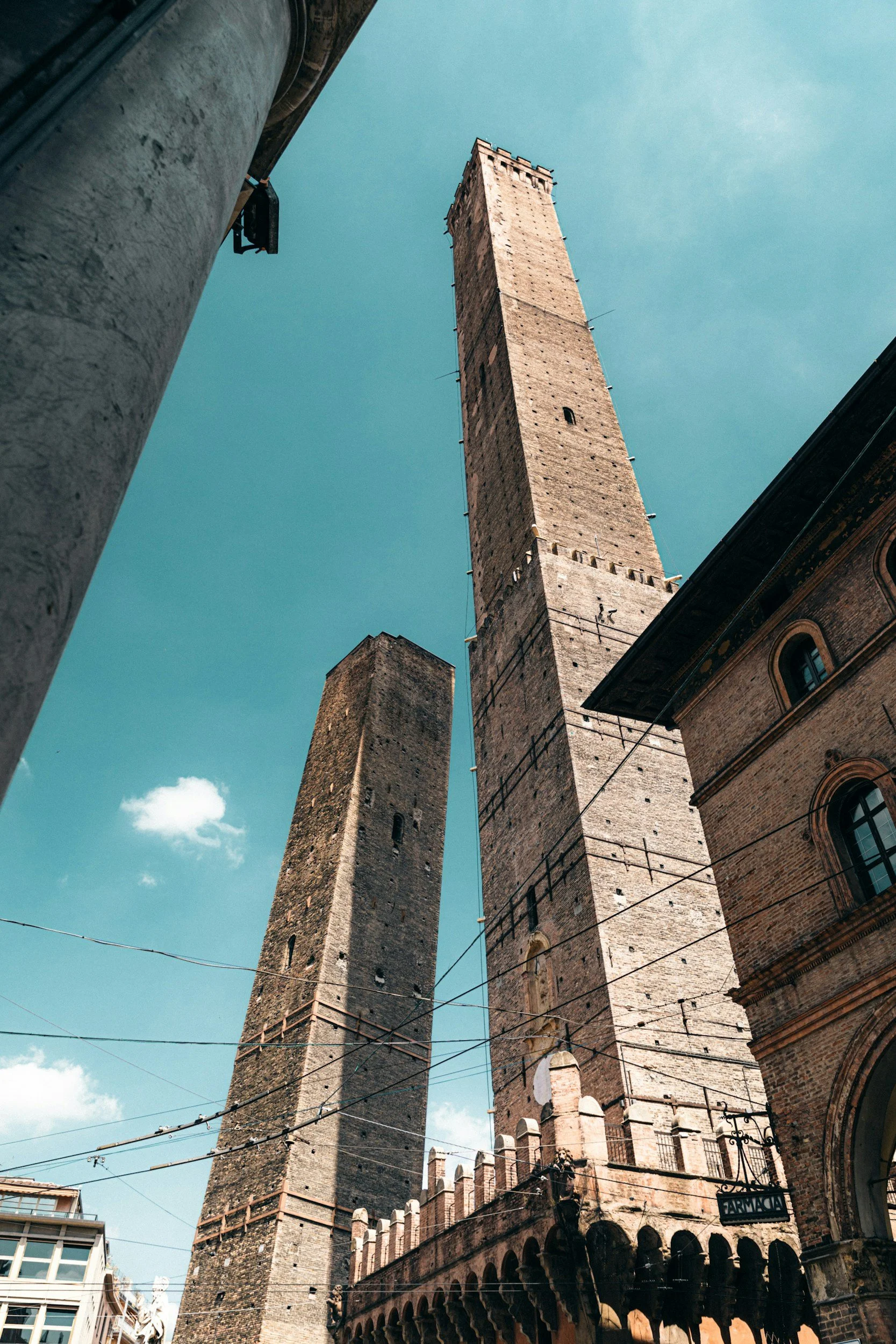
Site visit: The historic core of Bologna. Meeting point: Neptune statue. Visit Piazza Maggiore and the San Petronio Church. Visit Sala Borsa. Visit Quadrilatero market. Visit Cinema Modernissimo. Walk along via Rizzoli towards the two leaning towers. Visit Fondazione Innovazione UrbanaAperitivo – evening. Suggested reading: https://www.nytimes.com/interactive/2026/03/05/travel/things-to-do-bologna.html
Activity 2: Opening the Way for People: Milan's Tactical Urbanism and Piazze Aperte
Location: Milan
Activity Description:
Experience firsthand how Milan’s tactical urbanism advances principles of sustainability and resilience in contemporary planning. Through on-site exploration and analysis of the Piazze Aperte (Open Squares) project, this immersive, field-based activity demonstrates how people-centered, low-cost interventions can deliver lasting improvements to urban environments—vital for meeting today’s planning challenges. Guided by a diverse and internationally recognized team, participants will engage in dynamic discussions and collaborative learning focused on real-world adaptation and application. The session’s format highlights direct observation, practical learning, and peer exchange—all designed to equip you with actionable approaches to enhance livability, equity, and community resilience in your local context.
Duration: Half-day activity (approx. 3 hours of educational content).
Content: Tactical urbanism, pedestrian safety, and equity in urban design.
CM Credits: 3 CM credits.
Learning Outcomes: Evaluate the spatial and social impacts of tactical urbanism and develop actionable methods for scaling temporary street interventions into permanent capital improvements.
S&R Skills: Interwoven Equity, Livable Built Environment.
Instructors:
Primary Instructor: Demetrio Scopelliti (Director of Urban Planning, City of Milan)
Co-Instructors: Rick Pruetz, FAICP; Dr. Luisa Bravo; Kirstin Miller, AICP
Itinerary:
Site visit: Open Streets and Open Squares program by AMAT with Demetrio Scopelliti – morning. Starting point: Piazzale Bacone. Suggested reading: https://www.comune.milano.it/documents/20118/1320715/Piazze+Aperte+Report_eng.pdf/b0422e81-507c-872a-2796-4824d552d20f?version=1.0&t=1757508808822&download=true
Activity 3: Designing Together: Participatory Interventions in Milan's Green Districts
Location: Milan
Activity Description:
This field-based activity immerses participants in Milan’s green districts, using hands-on site exploration and collaborative workshops to address the AICP mandatory topics of sustainability and resilience as applied to current planning practice. Participants will learn effective participatory design methods for engaging diverse communities and translating feedback into practical green infrastructure that supports climate adaptation and neighborhood revitalization. Group discussions ensure participants actively consider how to adapt these strategies for immediate use in their own professional roles.
Learning Outcomes: Design public outreach frameworks for inclusive participation and translate community feedback into specific tactical green space programming.
S&R Skills: Facilitation Skills for Inclusive Decision-Making, Harmony with Nature.
Duration: Half-day activity (approx. 3 hours of educational content).
Content: Participatory design, green infrastructure, and community engagement.
CM Credits: 3 CM credits.
Instructors:
Primary Instructors: Chiara Quinzii & Diego Terna (Quinzii Terna Architecture)
Co-Instructors: Rick Pruetz, FAICP; Dr. Luisa Bravo; Kirstin Miller, AICP
Itinerary:
Site visit: Piazza Gae Aulenti, Vertical Forest and the Library of Trees with Diego Terna – afternoon. Suggested reading: https://www.landscapefirst.com/the-library-of-trees/
Activity 4: Modeling the Future: Digital Twins and Heritage Preservation
Location: Bologna
Activity Description:
This workshop provides a hands-on introduction to digital and semantic modeling of the built heritage, spanning from the scale of individual objects (artworks, paintings or ancient drawings) to entire buildings and territorial contexts. Participants will explore the role of digital models and digital twins in heritage preservation, with a focus on BIM-based approaches — including HBIM and ArchaeoBIM — as tools for documentation, interpretation, and long-term asset management.
The practical session guides participants through the fundamentals of managing an HBIM model of a historic or monumental building: core modeling principles, semantic enrichment, and model interrogation. Workflows for generating HBIM models from existing drawings and point clouds will also be introduced.
Learning Outcomes: Apply Heritage Building Information Modeling (HBIM) workflows and semantic interrogation techniques to preserve historic built environments.
S&R Skills: Data Analysis and Visualization, Systems Thinking.
Duration: Half-day activity (approx. 3 hours of educational content).
Content: Digital modeling, HBIM, and heritage preservation.
CM Credits: 3 CM credits.
Instructors:
Primary Instructor: Simone Garagnani (Professor of Architecture, University of Urbino)
Co-Instructors: Rick Pruetz, FAICP; Dr. Luisa Bravo; Kirstin Miller, AICP
Activity 5: Advancing Resilience: Cultural Innovation and Preservation in Venice
Location: Venice
Class Description:
This field-based activity takes place in Venice, where participants experience firsthand how cultural programming and the arts bolster urban resilience and sustainable heritage preservation amid challenges like mass tourism and climate pressures. You will collaborate on-site with local experts and artisans to analyze innovative models that maintain the city’s economic and cultural vitality—a critical aspect of sustainability for historic neighborhoods. The curriculum focuses on current planning applications, integrating direct field observation and reflective peer discussion. You’ll gain strategies tailored to address both global and local issues of resilience, and consider how to adapt these approaches effectively within your own professional practice and planning context.
Learning Outcomes: Formulate zoning and policy strategies that protect local artisanal economies and integrate cultural programming into neighborhood resilience plans.
S&R Skills: Supportive & Resilient Economy, Interwoven Equity.
Duration: Full-day activity (approx. 6 hours of educational content, excluding breaks).
Content: Cultural programming, artisanal economies, and urban resilience.
CM Credits: 6 CM credits.
Instructors:
Primary Instructor: Pier Paolo Scelsi (Art Director, CREA Cantieri del Contemporaneo)
Co-Instructors: Rick Pruetz, FAICP; Dr. Luisa Bravo; Kirstin Miller, AICP
Itinerary:
Site visit: Giudecca Island – morning. Suggested reading: https://educated-traveller.com/2025/07/20/giudecca-venice/ Site visit to CREA Cantieri del Contemporaneo – afternoon. Meeting with Pier Paolo Scelsi https://www.creavenice.com/
Activity 6: Reclaiming the Commons: Intersectional Strategies for Public Space Culture
Location: Bologna
Activity Description:
This immersive, field-based session uniquely explores the intersection of public space equity, sustainability, and resilience within contemporary planning practice. Through on-site analysis and interactive workshops, participants will investigate how intersectional art, architecture, and urban design break down barriers to access and promote more inclusive, vibrant civic environments. Rooted in planning issues relevant to the current CM reporting period, the session connects the United Nations' New Urban Agenda with actionable frameworks that can be adapted to a variety of local contexts. The experience blends site visits, peer dialogue, and collaborative reflection, ensuring direct application to participants’ professional roles.
Learning Outcomes: Apply intersectional design principles to ensure public spaces remain accessible to marginalized populations, aligning policies with the New Urban Agenda.
S&R Skills: Interwoven Equity, Livable Built Environment.
Duration: Half-day activity (approx. 3 hours of educational content).
Content: Intersectional design, public space equity, and social cohesion.
CM Credits: 3 CM credits.
Instructors:
Primary Instructor: Dr. Luisa Bravo
Co-Instructors: Rick Pruetz, FAICP; Kirstin Miller, AICP
Itinerary:
Site visit: The porticoes of Bologna towards San Luca - morning. Walking in the Saragozza suburban neighbourhood next to the Dall’Ara Stadium. Suggested reading: https://www.bolognawelcome.com/en/places/sports-places-en/renato-dallara-stadium Lecture at the Museum by Luisa Bravo + peer to peer discussion
Ready to transform your approach to urban planning? Join us in Italy to learn, connect, and bring world-class sustainable solutions back to your community. Register for City SPARK today and take the next step in your professional development journey. Contact us at kirstin@ecocitybuilders.org if you have any questions regarding the curriculum or CM credit eligibility. REGISTER HERE: https://donorbox.org/events/924811/steps/choose_tickets